Nutritious Chicory
The origin of Chicory is described in a German folk tale. A young woman sat down at the side of a road to weep for her dead lover. None could console her, and so great was her grief that she resolved never to stop weeping unless she was turned into a flower. She was transformed into the chicory.
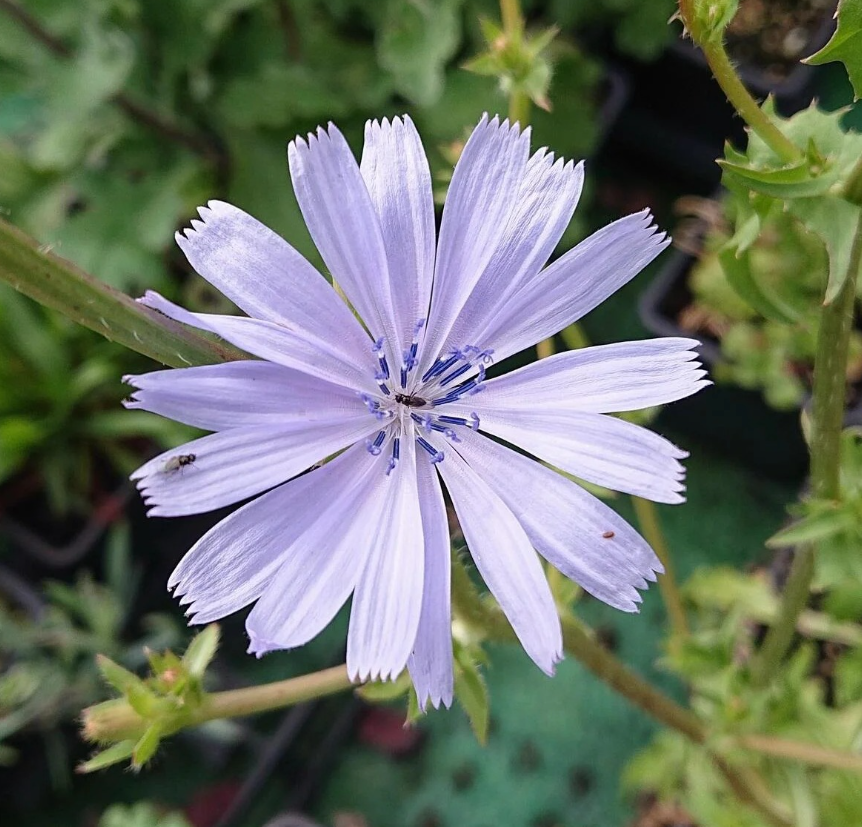
Wild Chicory has been known here since at least Roman times and has naturalised. It is often found on roadsides, rough grasslands and wastelands. This tall plant is easy to grow in a herb bed or towards the back of a border. The beautiful flowers are usually sky blue in colour and have 15-20 petals which open in bright light.
The nutritious foliage can be eaten as salad leaves and the dried and ground roots have been used as a coffee substitute.
Chicory is one of the bitter herbs of the Jewish Passover and is generally considered to be a symbol of the good fortune that is to follow.
Other local common names across the country include Blue daisy; Blue dandelion; Blue sailors; Blue weed; Bunk; Coffeeweed; Cornflower; Hendibeh; Horseweed; Ragged sailors; Succory; Wild bachelor's buttons; Wild endive.